
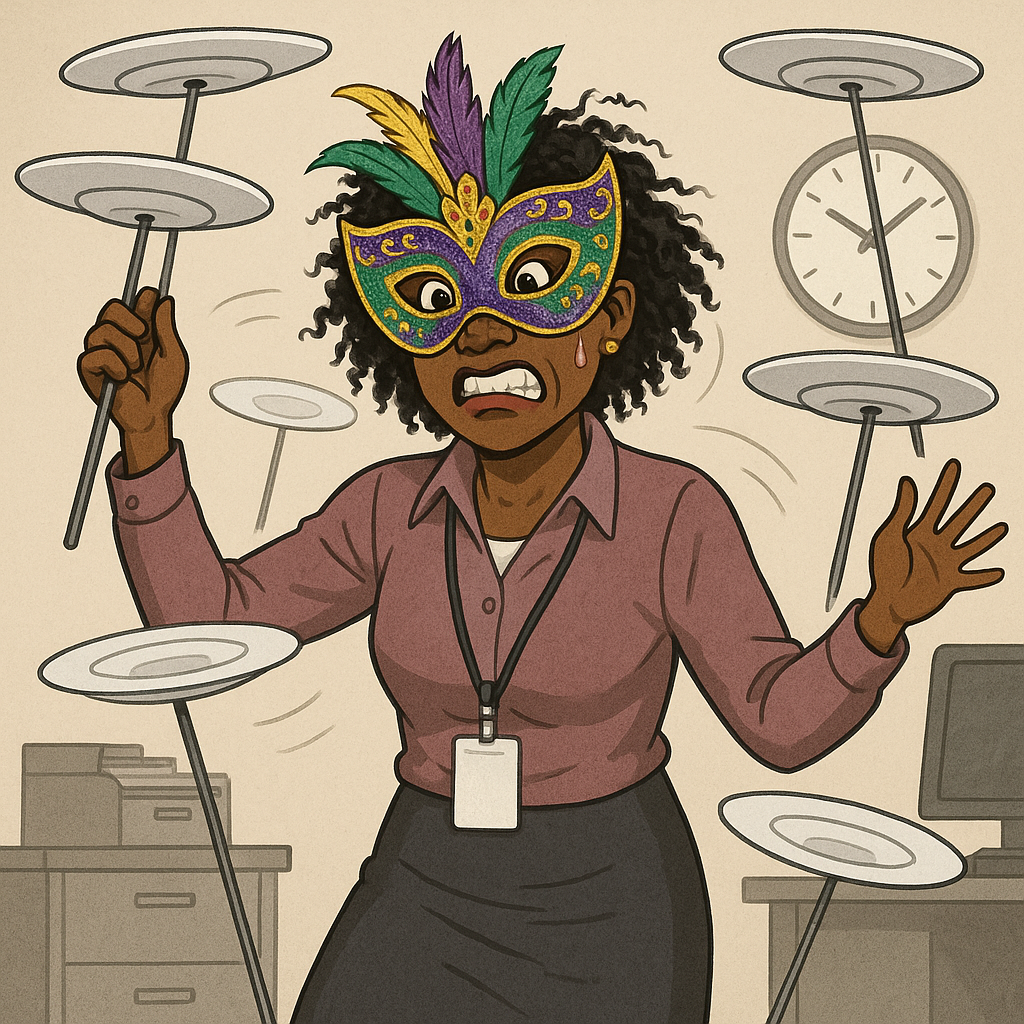
Are you so tired when you get home from work that you can hardly lift one foot in front of the other? Forget about making dinner, any errands, children’s activities, or spending quality time with loved ones. The couch is calling!
For adults with ADHD, (current statistics indicate that is some 15.5 million in the US1 and close to 2 million in Canada2), being tired after work happens at a whole ‘nother level. For many people with ADHD, that extra effort goes into ‘masking’ (also called camouflaging) at work. This is when someone with ADHD behaves as though they don’t have ADHD. This can involve copying the behaviour of neurotypical colleagues, or being hyperaware of their tendency to fidget, or forget things and over-fixate on mitigating those tendencies. For example – checking to make sure the door is locked multiple times, or sitting on their hands to prevent fidgeting.
People mask their ADHD for a number of reasons – to fit in socially, to avoid stigma or feeling different, or even being worried that disclosing their ADHD symptoms may have a negative impact on their job security. The thing is, masking is exhausting and ultimately, not sustainable. For the neurotypical readers – imagine going about your daily routine while constantly (and discreetly) checking to see what others are doing, course-correcting yourself if you are doing it differently, all the while accompanied by an inner critic who keeps a running commentary of how poorly you’re doing it. Sounds tiring and stressful? It is. And, because you’re masking, you are not able to ask for what you need to be successful in your workplace – whether that be a formal accommodation of note-taking software (hello generative AI!), fixed desk seating in an environment of hot-desking, or noise-cancelling headphones – or informal accommodations that allow you to structure your day to reflect how you work best, or to receive managerial requests and information in writing so you can plug it into your calendaring system rather than have to remember the key points from a hallway conversation.
This costs the employee in time and energy, and doesn’t set them up to succeed in the workplace. It’s easy to see how spinning all of those plates could result in a workplace fail that may cost them their job. In fact, adults with ADHD are 60% more likely to be fired3, may struggle with productivity and may take more sick days than their neurotypical counterparts4.
By eliminating masking and actively managing ADHD symptoms at work, neurodivergent employees can focus their energy on the things that matter both at work and at home.
This can be easier said than done. Not everyone feels safe disclosing they have ADHD to their employer (remember the statistic that adults with ADHD are 60% more likely to be fired? The ADHD community certainly does), and according to legislation in both Canada and in the US, they don’t have to. In many cases, employees can ask for what they need without disclosing their ADHD by having conversations with their managers about how they do their best work. And good people leaders collaborate with their teams to create working environments that support the different ways of working to enable people to be at their best, regardless of whether they have a diagnosis or not.
Creating a neuroinclusive workplace is a win for employers and employees. It does not need to cost a lot, and starts with executive leadership modelling a culture of psychological safety where employees do not feel the need to mask or camouflage to fit in. Small changes in how you work together can make a massive difference in productivity, innovation and engagement.
Interested in finding out more about how to make your workplace more neuroinclusive? I found the resources below to be very helpful:
- Podcast with Dr. Ari Tuckman
- ADHD Goes to Work
References
(1) https://chadd.org/about-adhd/general-prevalence-adults/
(2) https://caddac.ca/about-adhd/
(3) https://www.adhdadvisor.org/learn/adhd-statistics-and-facts
 Leadership & ADHD Coaching | Keynotes | Workshops